
Fairyland: Merge & Magic
Slimmerbits LLCSimulation
4.6990.00 Reviews
- Version
- 1.503.4
- Installs
- 1.00M
- Age Rating
- Everyone
Screenshots
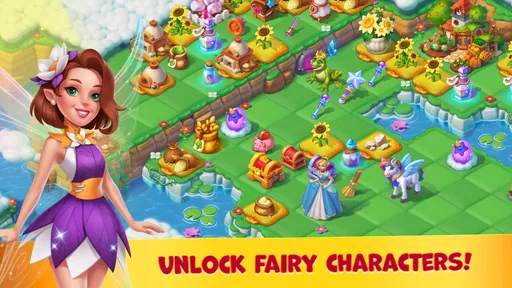
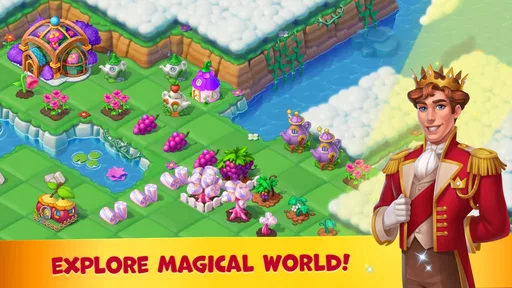
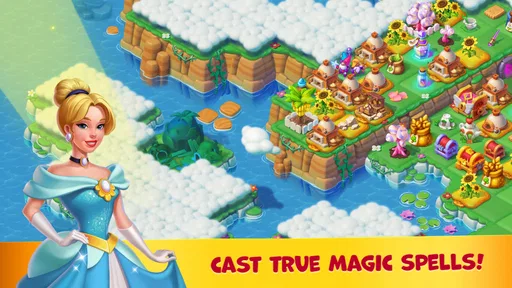
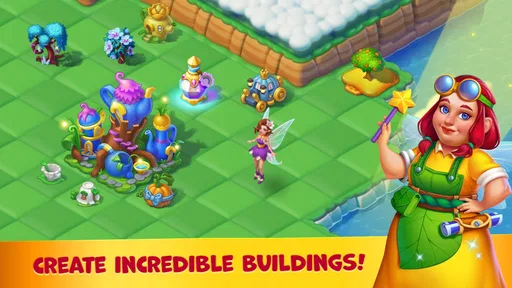
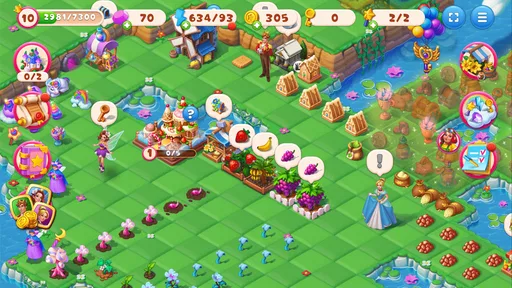
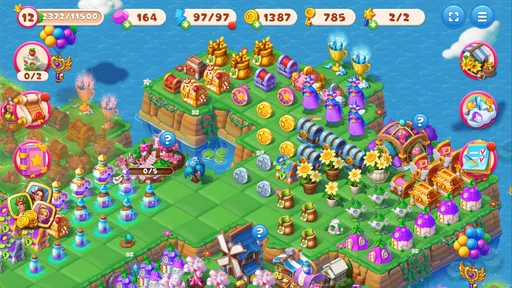
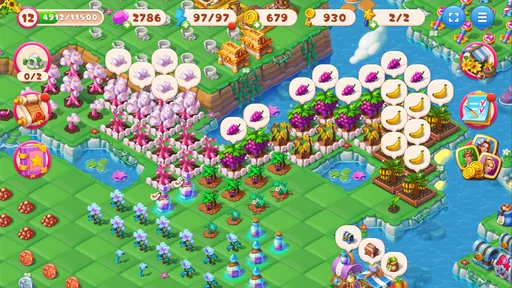
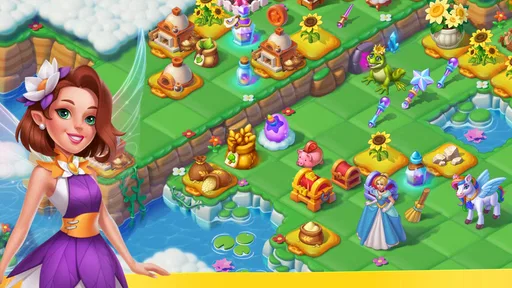
Our Review of Fairyland: Merge & Magic
 Analysis by Appyee
I went into Fairyland: Merge & Magic expecting a light fantasy puzzle game, and that is exactly where it feels most comfortable: a colorful simulation experience built around combining objects on a fairy island. The basic idea is easy to understand, but the appeal comes from deciding what to merge, what to keep nearby, and how to use limited space without turning the island into a messy pile of unfinished items.
It is free to download, which makes trying it out straightforward. The game is listed for everyone, and Slimmerbits LLC is the developer behind it. Its store summary presents the experience as merge magic on a fairy island, while the shorter description simply calls it Fairyland. Those labels are brief, but they point toward the right expectation: this is a relaxed, collection-focused game rather than a demanding action title or a deep management simulator.
The game has reached over a million installs and holds a 4.6 average from around forty-seven thousand ratings, with close to a thousand written reviews. Those figures suggest that the merge format has found a substantial audience. They do not automatically make it perfect, though, so I paid more attention to how the loop feels over repeated sessions, where the free model becomes noticeable, and which kinds of players are likely to enjoy its pace.
How the island loop works in practice
The central pleasure is the simple act of bringing matching objects together and watching them become something more useful or more advanced. That interaction is satisfying because it turns a cluttered board into visible progress. Instead of solving a puzzle once and moving on, I am gradually shaping the island by making choices about space, timing, and the next useful combination.
That makes the game feel different from a traditional match-three title. In a match-three game, the board usually pushes me toward immediate moves and a short score-based objective. Here, the important question is often whether I should merge now or hold items for a better arrangement later. The slower decision-making gives the game a more hands-on, organizing quality.
I found the island setting helpful because it gives the merging a sense of place. Objects are not just colored pieces in an abstract grid; they belong to a growing fairyland that I return to and tidy up. That visual context makes small improvements feel more meaningful, particularly during short sessions when I only have time to complete a few combinations.
The strongest part of the design is its accessibility. You do not need to learn complicated controls, memorize a long list of commands, or react quickly. The interface is suited to tapping and dragging, so it works well when I want something calm while commuting, waiting for an appointment, or winding down before bed. The Everyone rating also fits the approachable tone of the game.
Why board organization matters more than it first appears
My most useful habit was to avoid merging every available pair immediately. Early combinations are tempting because they provide instant progress, but careless merging can leave the island filled with isolated objects that are difficult to use efficiently. Keeping related pieces near one another makes later decisions easier and reduces the amount of dragging required.
I also learned to treat open space as a resource. A board that looks full can make the game feel slower even when there are plenty of possible actions. Before starting a chain of merges, I prefer to clear a small working area rather than scatter new objects across the island. This is a small change, but it makes the experience less frustrating and helps me see which combinations are actually available.
Another practical approach is to separate “active” items from pieces I am saving. When everything is mixed together, I spend more time searching than playing. Creating loose groups for current merges and future combinations gives the island a more readable layout. The game does not need a complicated strategy guide to reward this behavior; the board itself teaches that organization improves the flow.
This is also where the game differs from many casual alternatives. A quick puzzle app can be enjoyable even when I play without planning, while this one gives me more reason to think about the next few moves. That extra layer is welcome for players who like light optimization, but it may feel like unnecessary housekeeping to someone who wants instant, disposable rounds.
A good fit for short sessions, with a slower sense of progress
I can open the game for a few minutes, make several merges, and leave without needing to remember a complicated objective. That makes it practical for fragmented free time. The island remains a gentle ongoing project rather than a challenge that demands a long uninterrupted sitting.
The trade-off is that the satisfaction is gradual. Players looking for rapid victories, intense competition, or a strong action component will probably find the pace too soft. The game’s appeal depends on enjoying accumulation: one object becomes another, the island becomes more developed, and a small amount of order replaces clutter.
That slow rhythm is not a flaw by itself, but it is important when deciding whether to install it. I would recommend it to someone who likes relaxing progression and visual organization. I would point a player toward a faster puzzle game instead if they mainly want compact levels with a clear win-or-lose result every few minutes.
What the free model means for value
The download is free, so the sensible way to judge the game is by how much of the basic experience it lets me explore before asking for optional spending. The listed in-app purchase range runs from $0.99 to $99.99 per item. That is a wide range, and it means the game should be approached as a free-access title with optional purchases rather than as a single paid product with one predictable cost.
I appreciate that this structure lowers the barrier to entry. I can test the island loop, decide whether the visual style suits me, and see whether the gradual pace fits my habits without paying upfront. For a casual simulation game, that is useful because the appeal is personal: some players will enjoy the gentle repetition, while others will quickly want more urgency or variety.
At the same time, free access does not mean unlimited value for every player. Someone who dislikes in-app purchases on principle may prefer a paid game with a clearly defined price and no optional spending decisions. Someone who is comfortable playing slowly can get more value from the free route, while a player who wants to accelerate progress may encounter a very different spending experience.
I would set a personal limit before buying anything. The presence of an item priced at the upper end of the listed range makes it especially important not to treat small purchases as automatically harmless. A few low-cost decisions can feel insignificant individually, but the broader question is whether the purchase improves a part of the game I already enjoy or merely removes a delay that I could accept by playing normally.
That distinction helped me evaluate the game more fairly. If I enjoy arranging the island and making gradual discoveries, free access can provide a pleasant routine. If I only enjoy the game when progress is fast, optional purchases may become tempting, and the value becomes less attractive. The right choice depends less on the headline price and more on whether I am happy with the game’s natural pace.
Where the entertainment value comes from
The value is not in a single dramatic feature. It comes from the combination of simple controls, a persistent fairyland, and the small decisions involved in managing objects. The game gives ordinary downtime a clear activity without demanding intense concentration. I can play attentively when I want to plan, or casually when I only want to complete a few obvious merges.
There is also a useful psychological benefit to the board’s visual feedback. When an area becomes more organized, the improvement is immediately visible. That can make a short session feel worthwhile even if I have not reached a major milestone. In many casual games, progress is represented mainly by a number or a meter; here, the island itself helps communicate that something has changed.
One of my favorite use cases is a short evening session after finishing routine tasks. I do not have enough energy for a competitive game, but I still want an activity with a little structure. I can open the island, sort a few objects, make careful combinations, and stop before the session becomes demanding. The game works particularly well in that space between passive scrolling and serious gaming.
It can also suit families looking for a gentle game that does not rely on a mature theme. The Everyone rating makes it broadly approachable, although younger players may still need guidance around optional purchases. The simple merge interaction is easy to demonstrate, and organizing the island can become a shared activity rather than something that requires advanced gaming experience.
The trade-offs I noticed after settling into it
The same simplicity that makes the game welcoming can eventually make it feel repetitive. Merging objects is pleasant, but players who need constant mechanical change may find the loop narrow. The island setting adds personality, yet it does not transform the basic interaction into a fast-moving adventure. I would not choose this game for variety alone; I would choose it for the calm, incremental routine.
Space management can be satisfying, but it can also become friction. When the board fills with pieces that are not immediately useful, the player’s attention shifts from discovery to cleanup. That is manageable if I plan ahead, but it can feel like the game is asking me to organize inventory rather than enjoy the fantasy setting.
The free-to-play structure creates another trade-off. Because optional purchases range from a small amount to a much larger amount, players need to be comfortable making their own boundaries. I prefer to treat purchases as a choice for convenience, not as a requirement for the game to remain enjoyable. Anyone who finds that distinction difficult may have a better experience with a premium alternative.
The current version is 1.503.4, so the game is clearly an established, actively presented product rather than a brand-new experiment. I still judge it by the moment-to-moment loop rather than by its version number. A high version number does not change the fact that the core experience is intentionally relaxed and repetitive.
Players who want a story-heavy fantasy game should also adjust their expectations. The fairy theme gives the island a pleasant identity, but this is fundamentally a merge-based simulation game. It is not the right choice if the main goal is dialogue, character-driven drama, reflex combat, or a large open world to explore freely.
Three habits that make the experience better
First, I recommend taking a moment to scan the whole island before making a merge. The obvious pair is not always the best first move. Looking for a sequence that opens space or brings several related pieces closer can prevent the board from becoming awkward later.
Second, I avoid using the entire island as one undifferentiated storage area. Even a loose separation between pieces I am actively combining and pieces I am preserving makes the next session easier to resume. This is particularly useful when I return after a break and do not want to reconstruct my plans from a crowded board.
Third, I decide whether I am playing for progress or relaxation before opening the game. When I want progress, I organize first and merge with a plan. When I want relaxation, I accept that a few inefficient moves do not matter. This prevents the optimization layer from turning a gentle game into a chore.
These habits are not complicated, but they reveal the game’s deeper appeal. It rewards attention without demanding expertise. The best results come from treating the island as a small workspace, not simply tapping every available match as quickly as possible.
Who should install it, and who should skip it
I think the strongest audience is made up of players who enjoy relaxed merge games, light simulation, and gradual visual progress. It is a good choice if you like arranging things, making small plans, and returning to an ongoing project in short bursts. The fantasy island gives the routine enough character to feel more personal than a plain puzzle grid.
It is also suitable for casual players who do not want demanding controls. You can pick up the basic interaction quickly, and the game does not require the reflexes associated with action games. If your ideal mobile session lasts only a few minutes, the island can provide a contained activity without forcing you into a long match.
I would be more cautious recommending it to players who are highly sensitive to repetition or optional spending. If you want a fixed-price experience with a clear ending, this free game may not offer the kind of value you are seeking. Likewise, if you prefer competitive rankings, fast rounds, or constant novelty, a traditional puzzle title may hold your attention better.
Parents and guardians should also remember that a game rated for everyone can still include optional purchases. The free download is convenient, but purchase decisions should be handled deliberately, especially on a shared device. That is not a criticism unique to this title; it is simply part of evaluating a game whose listed purchase options extend from $0.99 to $99.99.
Compared with a paid simulation game, this one is easier to sample but less predictable in total cost. Compared with a match-three game, it offers more control over arrangement and long-term board organization, but less emphasis on quick rounds. Compared with a large fantasy adventure, it gives up exploration and narrative depth in exchange for a quieter, more manageable routine.
My verdict on the free download
After spending time with it, I see Fairyland: Merge & Magic as a pleasant choice for a specific mood rather than a universal recommendation. Its best qualities are the approachable merge interaction, the fairy-island setting, and the satisfaction of turning disorder into visible progress. I like that it can fill a short break without demanding full concentration, while still offering enough planning to keep the board from feeling completely automatic.
The main limitations are equally clear. The loop can become repetitive, crowded boards can create unnecessary friction, and the optional purchase range means players should decide in advance how they want to approach spending. The game is most enjoyable when I accept its slower rhythm instead of trying to force it into a faster or more competitive style.
For me, the free access is enough reason to try it if you already enjoy merge-based simulation games. I would start without purchasing anything, learn how the island’s pacing feels, and use board organization to keep the experience comfortable. If the gradual progress becomes satisfying on its own, the game can offer good casual value without requiring a payment.
If you want a polished, high-energy challenge or a one-time purchase with no spending choices, I would skip it and choose a different kind of game. But if you want a gentle fairy-themed island to tidy, expand, and revisit in small sessions, this is an easy title to sample. My recommendation is to install it for free, play at your own pace, and only consider an optional purchase if it adds convenience rather than rescuing a loop you do not already enjoy.
Verdict
Strengths of Fairyland: Merge & Magic
- Relaxing merge gameplay that is easy to learn and enjoyable in short sessions.
- A charming fairy-tale world filled with colorful characters and environments.
- Many items and creatures to discover, merge, and gradually upgrade.
- Regular tasks and events provide extra goals beyond the main island.
- Playable at your own pace without requiring fast reflexes or complex controls.
Limitations of Fairyland: Merge & Magic
- Energy limits can interrupt progress during longer play sessions.
- Some upgrades and expansions require patience or premium currency.
- The large number of mergeable items may make the board feel cluttered.
- Progress can become repetitive after completing the initial discovery stages.
- Ads and in-app purchases may affect the experience for free players.
Similar Picks in This Category
View All
Truckers of Europe 3
Wanda Software4.3

Town Building Life Simulator
XGame Global4.2

Fidget Toys Trading・Pop It 3D
Freeplay Inc4.7

Sculpt People
CrazyLabs LTD4.4

Scary Teacher 3D
Z & K Games4.2

Hair Tattoo: Barber Shop Game
CASUAL AZUR GAMES4.3
Frequently Asked Questions
What is Fairyland: Merge & Magic, and how does the gameplay work?
Fairyland: Merge & Magic is a casual puzzle and adventure game built around merging objects to create more advanced items. You explore a colorful magical world, complete quests, unlock new areas, and help characters solve problems. The main gameplay is easy to understand: combine three or more matching objects, use the results to complete tasks, and gradually expand your fairy-tale kingdom.
Is Fairyland: Merge & Magic free to download and play?
Yes, Fairyland: Merge & Magic can generally be downloaded and played for free on supported Android and iOS devices. However, the game includes optional in-app purchases, which may provide extra energy, resources, boosters, or faster progress. You can enjoy the core experience without paying, although waiting for energy regeneration and managing limited resources may become more important during longer play sessions.
Does Fairyland: Merge & Magic require an internet connection?
An internet connection is usually recommended for Fairyland: Merge & Magic because online access may be needed to synchronize progress, deliver events, display advertisements, process purchases, and provide updated content. Some parts of the game may work temporarily without a connection, but offline availability can vary by device and version. For the most reliable experience, play while connected to Wi-Fi or mobile data.
Are there advertisements or in-app purchases in Fairyland: Merge & Magic?
Yes, players should expect optional purchases and advertising features in Fairyland: Merge & Magic. Advertisements may offer rewards such as additional energy or useful bonuses, while in-app purchases can provide premium currency, bundles, or convenience items. Spending is not required to explore the game, but progress can feel slower when resources are limited, so parental controls and purchase restrictions may be useful.
Is Fairyland: Merge & Magic suitable for children and casual players?
Fairyland: Merge & Magic is designed for casual players who enjoy relaxed puzzles, collection mechanics, and light fantasy storytelling. Its colorful presentation and straightforward controls make it approachable, but the presence of advertisements, optional purchases, and timed or energy-based progression should be considered before giving it to children. Parents should review the store rating, privacy details, and device settings for their region.
Play our best games!


